
Who Could Lead Democrats in 2028? Early White House Contenders Begin to Take Shape

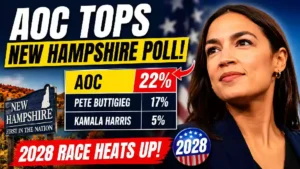
Political leaders including Kamala Harris, Alexandria Ocasio-Cortez, Gavin Newsom, Pete Buttigieg, and Ro Khanna are featured in this YouTube thumbnail exploring the emerging Democratic field and the early race for the 2028 U.S. presidential election.
Who Could Lead Democrats in 2028? Early White House Contenders Begin to Take Shape
Democratic Leaders Primary Strategy and Party Divisions Fuel Early 2028 Presidential Discussion
Although the 2028 U.S. presidential election remains several years away, political observers are already examining which Democratic leaders could emerge as frontrunners for the party’s nomination. During a recent political discussion, commentators explored the strengths and challenges facing several high-profile Democrats while debating how the party’s primary calendar and internal divisions could shape the next presidential race.
South Carolina Expected to Remain a Key Primary Battleground
One of the central themes of the discussion was the growing importance of South Carolina in the Democratic presidential nomination process.
Commentators noted that President Joe Biden’s successful comeback during the 2020 Democratic primary highlighted the state’s influence after disappointing performances in Iowa and New Hampshire. They argued that South Carolina’s large and influential Black electorate continues to play a critical role in selecting Democratic nominees, making the state an essential early contest for anyone seeking the White House.
Several panelists suggested that party leaders appear committed to maintaining South Carolina’s prominent position in the primary calendar, believing it better reflects a broad segment of the Democratic coalition.
Kamala Harris Starts With Strong Name Recognition
Among the potential 2028 contenders discussed, former Vice President Kamala Harris was viewed as one of the best-known Democratic figures.
Panelists suggested Harris currently enjoys an advantage because of her national profile and widespread name recognition. However, they also emphasized that the political landscape could change considerably after the 2026 midterm elections, when prospective candidates are expected to begin campaigning more aggressively.
The discussion acknowledged that early polling often reflects familiarity rather than voter commitment, meaning the Democratic field remains far from settled.
AOC Faces Questions About Her Path Forward
Representative Alexandria Ocasio-Cortez (AOC) also featured prominently in the conversation as one of the Democratic Party’s most recognizable progressive voices.
Commentators observed that while AOC enjoys significant national attention, her path to securing the Democratic nomination could prove challenging. They pointed to ongoing debates within the Democratic Socialists of America (DSA), where members continue discussing whether she fully represents the organization’s progressive agenda.
The panel also suggested that South Carolina’s Democratic electorate may present additional hurdles for candidates identified with the party’s progressive wing.
Democratic Bench Runs Deeper Than Early Favorites
Beyond Harris and AOC, the discussion highlighted several Democrats who could become serious contenders for the 2028 nomination.
Those mentioned included California Governor Gavin Newsom, former Transportation Secretary Pete Buttigieg, Representative Ro Khanna, Maryland Governor Wes Moore, Illinois Governor JB Pritzker, and Pennsylvania Governor Josh Shapiro.
Commentators agreed that the Democratic Party currently has one of its deepest benches in years, with governors, members of Congress, and former administration officials all viewed as potential presidential candidates.
Maine Democratic Dispute Highlights Internal Party Challenges
The discussion also turned to controversy surrounding the Democratic nomination process in Maine.
Panelists referenced criticism involving candidate Graham Platner, whose campaign became overshadowed by multiple controversies before party officials moved to adopt a different nomination process.
Commentators debated whether the situation reflected broader challenges within the Democratic Party regarding candidate selection and internal decision-making. While opinions varied, the discussion underscored how local political disputes can influence broader conversations about party leadership and governance.
AOC’s Neutral Position Draws Attention
One point that received particular attention was AOC’s decision not to become involved in the Maine Democratic primary.
According to the discussion, several prominent Democrats publicly backed candidates in the race, while AOC chose to remain on the sidelines. Panelists suggested that avoiding the controversy may have demonstrated political discipline by keeping her removed from an increasingly divisive contest.
Progressive Politics Remain a Topic of Debate
The conversation also explored the influence of the Democratic Socialists of America within the broader Democratic Party.
Panelists noted that upcoming interviews with DSA leadership would focus on the organization’s policy platform, political priorities, and relationship with mainstream Democrats. Some Democratic leaders have publicly questioned the movement’s direction, while others believe progressive activists remain an important part of the party’s future.
The debate illustrates the ideological questions Democrats continue to face as they prepare for future national elections.
Looking Ahead to the 2028 Presidential Race
While no Democratic candidate has officially secured the spotlight for 2028, discussions surrounding the party’s future are already intensifying. Primary scheduling, voter demographics, ideological differences, and candidate recognition are all expected to shape the nomination battle in the years ahead.
As the 2026 midterm elections conclude and prospective candidates begin laying the groundwork for presidential campaigns, Democrats are expected to enter a highly competitive race featuring established national figures alongside a new generation of party leaders. Although the field remains fluid, the conversation demonstrates that the race for the Democratic nomination is already taking shape and will likely become one of the defining political stories leading into the 2028 election.
#Election2028 #Democrats #KamalaHarris #AOC #GavinNewsom #PeteButtigieg #USPolitics #WhiteHouse #PoliticalNews #BreakingNews