
Meta Trial Puts Instagram and Facebook Under Pressure as 29 States Challenge Social Media Design
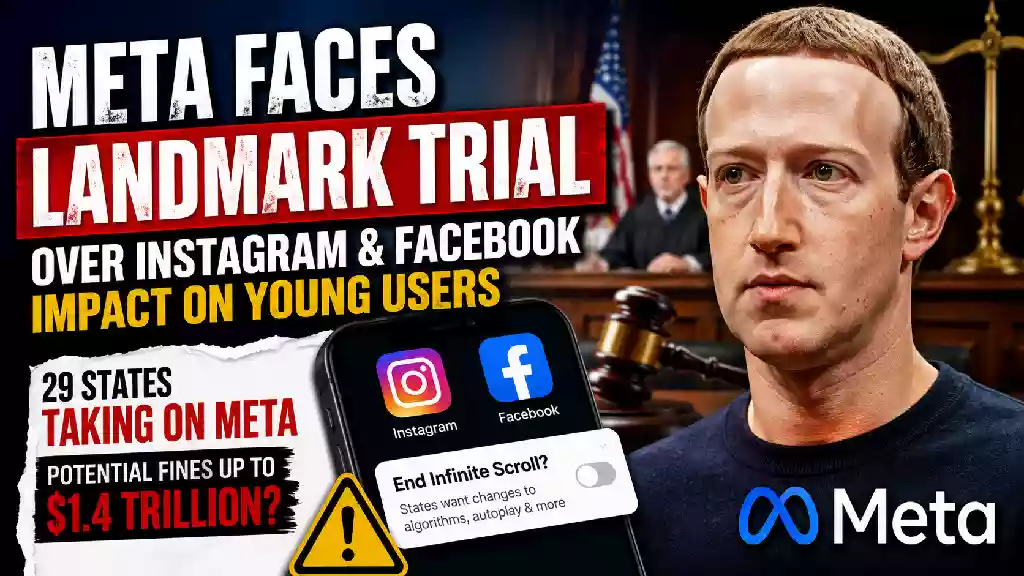
Meta CEO Mark Zuckerberg is featured in a courtroom-themed graphic as 29 U.S. states challenge Instagram and Facebook over alleged harmful design features affecting young users.
Meta Trial Puts Instagram and Facebook Under Pressure as 29 States Challenge Social Media Design
Meta Faces Landmark Lawsuit That Could Reshape Instagram and Facebook
A landmark legal battle against Meta, the parent company of Facebook and Instagram, is now putting the future design of social media under intense scrutiny. A coalition of 29 U.S. states is accusing the technology giant of deliberately designing its platforms in ways that encouraged young users to remain engaged while allegedly contributing to harm among children and teenagers. Meta strongly denies the allegations.
The case, which is being heard in California, could become one of the most consequential legal challenges yet involving social media and youth safety. Depending on the outcome, Meta could face significant financial penalties and pressure to make major changes to the way Instagram and Facebook operate.
Why Meta Is Facing the Lawsuit
The lawsuit stems from legal action filed in 2023. State officials allege that Meta incorporated features into Facebook and Instagram that encouraged excessive engagement among young users and that the company misled the public about potential risks.
At the center of the dispute is the claim that some elements of Meta’s platforms were “addictive” by design and could negatively affect vulnerable young users. Meta rejects those allegations and says it has a longstanding commitment to protecting young people online.
The case represents a broader change in how regulators are approaching social media. Instead of concentrating solely on harmful content posted by users, authorities are increasingly examining the design of the platforms themselves.
29 States Are Taking on Meta
The legal action involves 29 U.S. states, with California, Colorado, Kentucky and New Jersey serving as the lead plaintiffs in the current trial. The proceedings are expected to last several weeks.
The states are seeking changes to features they argue contribute to excessive social media use. Among the issues being examined are Meta’s algorithms, auto play and other engagement-focused features.
The states are also seeking stronger protections for younger users, potentially creating a precedent that could affect how technology companies design their products for children.
The $1.4 Trillion Question
One of the most attention-grabbing elements of the case is the potential financial exposure facing Meta.
Meta has said the potential damages could reach $1.4 trillion, a figure approaching the company’s overall market value. The states’ position on potential penalties has been reported differently, making it important to distinguish the $1.4 trillion figure from an actual court-ordered judgment.
If the court ultimately imposes substantial penalties, the financial consequences could be enormous. But the potential changes to Meta’s products could prove just as important as the money involved.
Instagram and Facebook Could Look Different
A major concern for users is what happens if the states succeed in forcing Meta to redesign parts of its platforms.
The lawsuit seeks changes involving features such as infinite scrolling, algorithms, likes and other engagement mechanisms. The states argue that these design elements can encourage users to spend more time on social media.
The supplied BBC report also identifies auto play and algorithm changes among the measures being sought.
Such changes could affect the everyday experience of millions of Instagram and Facebook users. Features that have become standard across social media could face greater regulatory scrutiny if the states prevail.
Growing Pressure Over Social Media and Children
The Meta trial comes as governments around the world debate how to protect children from potential risks associated with social media.
Australia has introduced restrictions on social media access for children under 16, while the United Kingdom and Canada have also considered measures targeting younger users. France has taken a different approach after its highest court blocked a proposed ban for children under 15.
The different approaches reflect a difficult policy debate involving child safety, mental health, privacy, parental responsibility and freedom of expression.
What the Trial Could Mean for Big Tech
The outcome of the Meta lawsuit could extend well beyond Facebook and Instagram.
If the states succeed in forcing major changes to Meta’s product design, other social media companies could face similar scrutiny. Regulators may increasingly question whether algorithms, infinite scrolling, notifications and other engagement features are appropriate for children and teenagers.
Meta has already introduced measures aimed at improving child safety and parental controls, but the states are seeking changes that could affect fundamental parts of the company’s business model.
For users, the case could ultimately determine whether the social media experience of the future looks significantly different from the platforms people use today.
The trial is still ongoing, and no final judgment has established that Meta intentionally designed its platforms to harm children. Meta continues to dispute the allegations. But regardless of the final verdict, the case demonstrates how rapidly the legal and political debate over social media, technology and youth safety is changing.
With billions of people using Meta’s platforms worldwide, the eventual ruling could have consequences far beyond the courtroom and potentially influence the future design of social media itself.
#Meta #Instagram #Facebook #MetaLawsuit #MetaTrial #SocialMedia #SocialMediaRegulation #ChildSafety #TechNews #BigTech