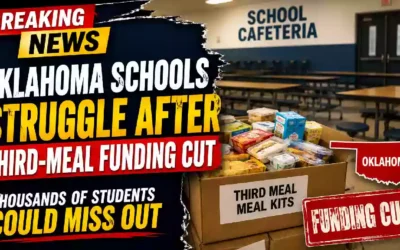

Funding Cut Puts Student Meal Programs at Risk Across Oklahoma

Oklahoma schools are struggling after funding for third-meal programs was cut, leaving districts searching for ways to continue providing additional meals to students.
Funding Cut Puts Student Meal Programs at Risk Across Oklahoma
Oklahoma Schools Struggle as Third-Meal Funding Cut Leaves Districts Scrambling
Oklahoma school districts are scrambling to respond after the Oklahoma State Department of Education (OSDE) eliminated funding that helped provide a third meal to students through an afterschool program. The decision has left districts that relied on federal reimbursement searching for ways to continue feeding children who depend on the additional meals.
The funding change is already affecting districts including Winnie Wood and Shawnee Public Schools, where administrators say the program played an important role in supporting students and families.
Third-Meal Program Helps Oklahoma Students
For some Oklahoma students, the additional school meal was more than a convenience. It provided extra food at the end of the school day for children who may face food insecurity at home.
Winnie Wood previously used the program to provide meal kits to students. School officials said the district will now lose approximately $30,000 a month that had supported the program. Without the federal reimbursement, district leaders say they cannot afford to maintain the third-meal service at the same level.
The change has also affected Shawnee Public Schools. The district has used the program since at least 2017 and provided about 28,000 meals last year, demonstrating the scale of the service for local students.
OSDE Points to Federal Program Concerns
OSDE said an investigation found that some individuals were not following federal guidelines connected to the program. State officials have said districts need to meet specific requirements to qualify for the federal funding.
The decision follows concerns raised months earlier by State Superintendent Lindale Fields, who requested an investigation into Feed the Kids, an organization involved in the federal afterschool meal program.
Fields alleged that operating costs and reported meal numbers had been inflated to obtain more federal funding. Those claims remain allegations and are at the center of the dispute surrounding the program.
School Leaders Question the Funding Cut
While district leaders acknowledge the importance of following federal requirements, some superintendents argue that eliminating the funding could ultimately hurt students who depend on the meals.
One superintendent said stronger oversight, professional development and additional training could have been used to address concerns about program compliance rather than removing support for the meals.
The issue is particularly significant in Hayworth, where the superintendent said approximately 70% of students use the program.
School officials say students should not lose access to meals because of administrative or compliance concerns involving the program.
Districts Struggle to Create New Programs
OSDE reportedly told affected school districts that they could establish structured afterschool programs to qualify for the funding. However, some administrators say the guidance came too late to make the necessary changes.
Winnie Wood officials said they were already about two weeks into the school year, making it difficult to suddenly establish an afterschool program that would meet the requirements. Creating such a program can require additional planning, staff and resources.
For districts already working with limited budgets, replacing the lost federal reimbursement could be especially challenging.
Superintendents Seek Answers From OSDE
The affected superintendents planned to meet with OSDE through Zoom to ask questions and seek clarification about the funding decision.
School leaders say they are disappointed by the change and hope the state will reconsider its decision. Their concerns center on the potential impact on students who rely on school-provided meals.
The dispute now puts Oklahoma education officials and local school districts in a difficult position: ensuring federal meal programs follow the rules while also maintaining access to food for students who need additional support.
For Winnie Wood, Shawnee and other affected districts, the immediate challenge is finding a way to continue serving students after the loss of federal reimbursement.
#OklahomaSchools #OklahomaEducation #SchoolMeals #ThirdMealProgram #SchoolFunding #MealFunding #ChildHunger #FoodInsecurity #SchoolNutrition #AfterschoolPrograms