
Trump Says Iran Must Honor Nuclear Commitments as Inspection Talks Advance
Trump Says Iran Must Honor Nuclear Commitments as Inspection Talks Advance
President Rejects Reports That Could Jeopardize Ongoing Negotiations
President Donald Trump is pushing back against reports he says falsely portray the status of ongoing negotiations with Iran, while emphasizing that Tehran must uphold its commitments regarding nuclear transparency and international inspections.
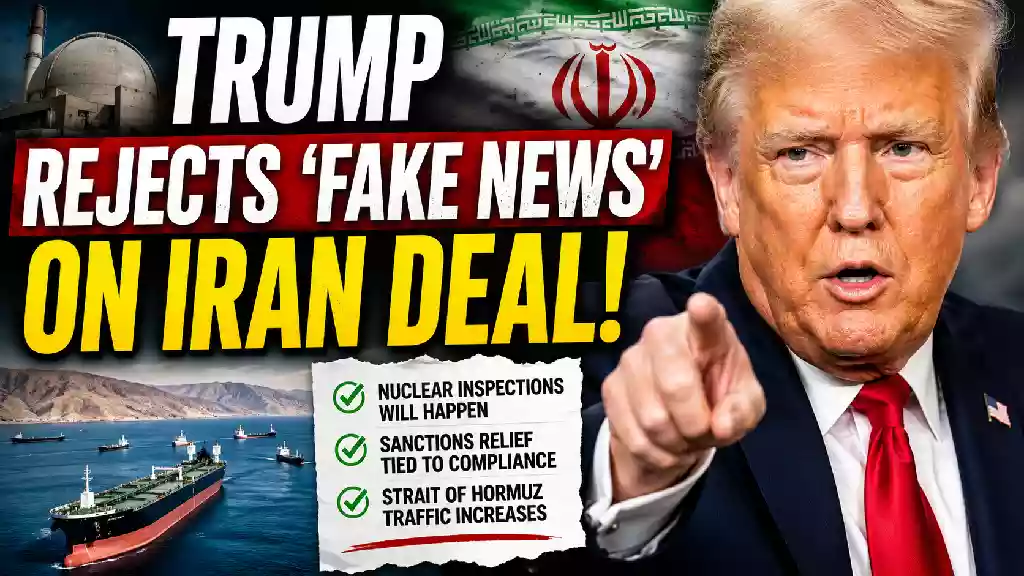
In a statement posted on Truth Social, Trump dismissed reports claiming Iran planned to impose fees, tolls, or insurance-related charges on vessels traveling through the Strait of Hormuz. The president said Iranian officials informed the United States that no such measures were being considered and warned that negotiations would collapse if the reports proved accurate.
The comments come as diplomatic efforts continue to secure international access to Iran’s nuclear facilities and establish a framework for monitoring the country’s nuclear activities.
Nuclear Site Access Remains Key Issue
At the center of the negotiations is a plan that would allow inspectors to enter Iran and verify the status of the country’s nuclear program.
According to U.S. officials, inspectors from the International Atomic Energy Agency (IAEA) are expected to gain access to nuclear facilities where highly enriched uranium may be stored. The inspections are intended to verify Iran’s compliance with international agreements and provide greater transparency regarding its nuclear activities.
Officials say discussions continue regarding the timing and scope of the inspections, but both Washington and international nuclear watchdogs have indicated that access agreements remain in place.
The IAEA has reiterated that nuclear materials and facilities covered by existing agreements will remain subject to international oversight and verification procedures.
Fallout From Operation Midnight Hammer
The inspection effort follows heightened tensions after the U.S. military operation known as Operation Midnight Hammer.
According to Trump, U.S. B-2 bombers targeted locations connected to Iran’s nuclear infrastructure, including sites where enriched uranium was believed to be stored deep underground. The operation remains a significant factor in ongoing negotiations as officials seek to determine the status and location of nuclear materials.
Trump expressed confidence that inspection teams will eventually be able to verify the condition of the targeted facilities and assess remaining nuclear assets.
While Iran has publicly disputed some claims regarding the inspections, U.S. officials maintain that agreements reached during negotiations will be honored.
Strait of Hormuz Sees Increased Shipping Activity
As diplomatic discussions continue, commercial shipping traffic through the Strait of Hormuz appears to be recovering.
The strategic waterway handles a significant portion of the world’s oil exports, making stability in the region a critical concern for global energy markets. Recent reports indicate that more oil tankers are transiting the route as ceasefire conditions hold and regional tensions show signs of easing.
Energy analysts continue to monitor developments closely, as disruptions in the Strait of Hormuz can quickly affect global oil prices and international supply chains.
The apparent increase in shipping activity is being viewed as a positive sign by market observers who have been watching the region closely in recent weeks.
Rubio Signals Opportunities if Iran Chooses Cooperation
Secretary of State Marco Rubio, who is participating in meetings across the Middle East, has emphasized that future economic opportunities for Iran will depend on decisions made by its leadership.
Rubio stated that Iran could benefit from improved relations with the international community if it embraces a more cooperative path and fulfills its commitments under any future agreement.
His remarks reflect a broader U.S. strategy that combines diplomatic engagement, economic incentives, and strict monitoring requirements designed to prevent further escalation in the region.
The administration has repeatedly stressed that any relief from sanctions will be tied directly to Iranian compliance with nuclear commitments and regional security obligations.
Sanctions Relief Linked to Humanitarian Purchases
U.S. officials say limited sanctions relief under discussion would be closely monitored and directed toward humanitarian needs.
According to reports, frozen Iranian funds could be placed into a supervised escrow account managed with oversight from both the United States and Qatar. Funds from the account would reportedly be used to purchase agricultural products, medical supplies, and other essential goods for Iranian civilians.
Trump indicated that initial purchases could total approximately $500 million in American-made products, though officials stress that any financial arrangements would remain subject to strict oversight mechanisms.
Supporters argue the approach provides assistance to ordinary Iranians while maintaining safeguards designed to prevent misuse of funds.
Path Forward Remains Uncertain
Despite signs of progress, significant challenges remain before a comprehensive agreement can be finalized. Questions regarding inspections, sanctions relief, regional security concerns, and long-term compliance continue to shape negotiations.
For now, U.S. officials remain focused on securing inspection access, maintaining pressure on Tehran to meet its obligations, and ensuring that any future agreement includes robust verification measures.
As talks continue, the outcome could have major implications for Middle East stability, global energy markets, and the future of U.S.-Iran relations.
#Trump #Iran #NuclearTalks #MiddleEast #IAEA #USIran #BreakingNews #Geopolitics #OilMarkets #ForeignPolicy