
US-Iran Talks Enter Crucial Phase as Trump Warns Against Strait of Hormuz Disruptions
US-Iran Talks Enter Crucial Phase as Trump Warns Against Strait of Hormuz Disruptions
Negotiators Meet in Switzerland to Advance Ceasefire Framework
Senior U.S. and Iranian officials are meeting in Switzerland for a new round of high-stakes negotiations aimed at advancing a memorandum of understanding that could shape the future of relations between Washington and Tehran.
Vice President J.D. Vance is leading the American delegation alongside White House envoy Steve Witkoff, while Iranian officials, including Parliament Speaker Mohammad Bagher Ghalibaf and Foreign Minister Abbas Araghchi, are representing Tehran. The discussions come during a 60-day ceasefire extension that both sides hope will create momentum for broader diplomatic progress.
The talks are expected to focus on Iran’s nuclear program, regional security concerns, and the framework for future negotiations as both countries attempt to avoid renewed confrontation.
Trump Rejects Iranian Threats Over Strait of Hormuz
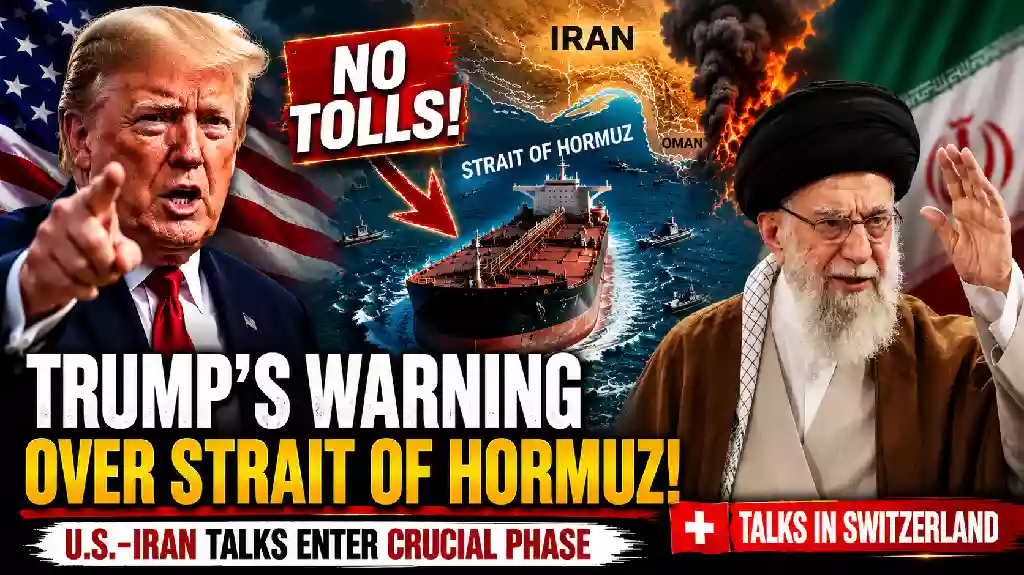
As negotiations continue, President Donald Trump has issued a warning regarding the Strait of Hormuz, one of the world’s most strategically important waterways.
The warning came after Iranian officials suggested they could seek greater control over maritime traffic through the strait, a route that handles roughly one-fifth of global oil shipments. Trump stated that no tolls would be imposed during the current ceasefire period and emphasized that the United States would not tolerate disruptions to international shipping.
The Strait of Hormuz remains a critical economic chokepoint connecting the Persian Gulf to global markets. Any interruption to commercial traffic could affect energy supplies and drive volatility in oil prices worldwide.
U.S. officials have maintained that American military forces remain positioned to protect freedom of navigation and ensure the continued movement of international commerce through the region.
Nuclear Negotiations Take Center Stage
According to U.S. officials, the Switzerland meetings are designed to determine whether Iran is prepared to engage in substantive negotiations regarding its nuclear activities.
Vice President Vance said the immediate goal is to establish the structure and leadership necessary for future discussions. American officials view the current ceasefire extension as an opportunity to test Iran’s willingness to make concessions and pursue a diplomatic solution.
While neither side has announced a final agreement, the negotiations are being viewed as a significant step toward reducing tensions that have defined U.S.-Iran relations for decades.
The Trump administration has argued that economic incentives and sanctions relief could be part of a broader arrangement if Iran demonstrates a commitment to meeting U.S. demands.
Lebanon Remains a Major Obstacle
Despite optimism surrounding the talks, ongoing violence involving Hezbollah and Israel continues to complicate diplomatic efforts.
Recent clashes along the Israel-Lebanon border have raised concerns that regional instability could undermine progress at the negotiating table. Hezbollah attacks against Israeli forces have prompted retaliatory Israeli airstrikes in southern Lebanon, increasing fears of further escalation.
Iranian officials have linked developments in Lebanon to the broader memorandum of understanding under discussion, arguing that continued military activity could jeopardize the ceasefire framework.
Israeli officials, meanwhile, have pointed to ongoing rocket and drone attacks as justification for military responses. The competing interpretations highlight the challenges negotiators face in maintaining stability while pursuing a broader agreement.
Gulf Nations Welcome Diplomatic Progress
Many Gulf states have expressed support for the ongoing negotiations, viewing the ceasefire extension as an important step toward reducing regional tensions.
Countries across the Gulf have long faced security concerns related to Iranian military activity and regional proxy conflicts. As a result, many leaders see diplomacy as the most effective path toward preventing future confrontations.
The stability of shipping routes, particularly the Strait of Hormuz, remains a top priority for Gulf nations whose economies rely heavily on energy exports.
Regional officials have largely welcomed efforts by American mediators to maintain dialogue and extend the ceasefire period.
Broader Vision for Middle East Stability
The Trump administration believes the current negotiations could lead to wider diplomatic opportunities throughout the Middle East.
Officials have suggested that progress with Iran could create momentum for additional regional agreements and potentially encourage more countries to strengthen ties with Israel. Some policymakers view the talks as part of a broader strategy to expand regional cooperation and reduce long-standing conflicts.
At the same time, discussions continue regarding Lebanon’s future security arrangements and efforts to limit the influence of armed groups operating along Israel’s northern border.
Critical Days Ahead
As negotiations continue in Switzerland, diplomats face the difficult task of balancing nuclear concerns, regional conflicts, and economic interests.
The outcome of the talks could determine whether the current ceasefire evolves into a broader agreement or whether tensions once again rise across the Middle East.
With global energy markets watching closely and regional security hanging in the balance, the coming days may prove decisive for both U.S.-Iran relations and the wider future of Middle East diplomacy.
#USIranTalks #DonaldTrump #Iran #StraitOfHormuz #MiddleEast #JDVance #NuclearTalks #Hezbollah #Israel #Lebanon