
Trump Administration Signals Progress on New Iran Agreement Amid Regional Talks
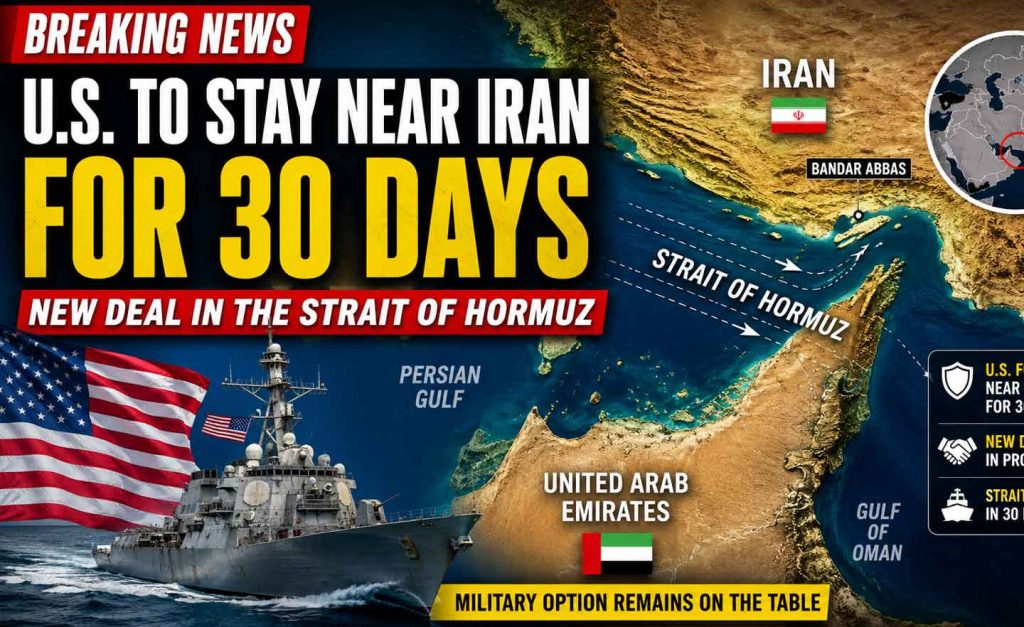
Trump Administration Signals Progress on New Iran Agreement Amid Regional Talks – U.S. Forces to Remain Near Iran During 30-Day Interim Arrangement
A potential new agreement between the United States and Iran is drawing international attention after reports emerged that negotiations have reached an advanced stage. According to reporting from Tel Aviv, President Donald Trump announced overnight that a framework agreement with Iran has “largely been negotiated,” although several details are still being finalized before an official announcement is made.
One of the key elements reportedly included in the developing agreement is a provision that would keep U.S. military forces positioned near Iran for at least 30 days. Regional sources familiar with the discussions indicated the move is intended to signal that military options remain available should Iran violate the agreement or continue activities related to nuclear weapons development.
The proposed understanding would also include temporary oil sanctions waivers for Iran, along with the release of billions of dollars in frozen Iranian assets and funds.
Regional Leaders Reportedly Support Negotiations
As negotiations intensified, President Trump reportedly held discussions with leaders from several Middle Eastern nations, including Saudi Arabia, Qatar, the United Arab Emirates, Egypt, Jordan, Turkey, and Pakistan. Diplomatic sources described the talks as productive and said regional leaders expressed support for continued negotiations and broader stability efforts in the region.
Another major focus of the talks involves the Strait of Hormuz, one of the world’s most important shipping lanes for oil and energy transportation. President Trump stated that the strait would soon reopen fully, although Iranian state media reportedly disputed claims that conditions would return completely to pre-war status. Instead, reports suggest vessel traffic may gradually return to previous levels over a 30-day period.
Secretary of State Marco Rubio also commented on the negotiations, saying there is a possibility that positive developments could emerge soon regarding both the Strait of Hormuz and broader efforts to prevent Iran from obtaining a nuclear weapon.
Questions Remain About Iran’s Nuclear Program
Despite reports of progress, major questions remain unresolved concerning Iran’s nuclear program. Officials and analysts continue to focus on what will happen to Iran’s existing stockpile of highly enriched uranium and whether Iran will be permitted to continue uranium enrichment activities in any capacity.
Current reports indicate Iran possesses uranium enriched to approximately 60 percent purity, a level considered dangerously close to weapons-grade material. Experts note that civilian nuclear programs typically require uranium enriched only to much lower levels.
The negotiations are also expected to address Iran’s enrichment facilities and centrifuge operations, which are central to the production of highly enriched uranium. While details remain unclear, officials say future discussions are likely to focus heavily on dismantling or restricting Iran’s ability to continue enrichment activities.
Reports suggest the memorandum of understanding currently under discussion could serve as the foundation for a broader long-term agreement. That future agreement would reportedly include additional concessions related to Iran’s nuclear infrastructure and commitments to prevent the country from developing nuclear weapons.
Israel Watching Closely as Talks Continue
The negotiations have also raised questions about Israel’s role in the discussions. Reports from both American and Israeli media suggest Israeli officials have largely remained quiet publicly while monitoring the talks closely.
Sources familiar with the negotiations indicated Israeli officials continue receiving updates from the United States regarding progress on reopening the Strait of Hormuz and discussions surrounding Iran’s nuclear program.
Political observers note that while some Israeli leaders have previously pushed for stronger measures against Iran, including possible regime change, the Trump administration appears focused on avoiding prolonged military conflict while still preventing Iran from acquiring nuclear weapons capabilities.
Officials involved in the discussions reportedly believe the developing agreement could reduce tensions across the Middle East while establishing a framework for future negotiations involving Iran’s nuclear ambitions and regional security concerns. However, final details have not yet been publicly released, and negotiations remain ongoing.
#Iran #Trump #MiddleEast #NuclearDeal #USMilitary #Israel #StraitOfHormuz #MarcoRubio #WorldNews #BreakingNews
Keane: U.S. Actions Could Put Iran’s Regime on a “Pathway to Collapse”
Tom Homan Warns “Justice Is Coming” for Those Funding Anti-ICE Protests