
Trump Warns DC Could Face Federal Intervention After Janeese Lewis George Primary Victory
Trump Warns DC Could Face Federal Intervention After Janeese Lewis George Primary Victory
President Criticizes Progressive Candidate as Debate Over Crime and Governance Intensifies
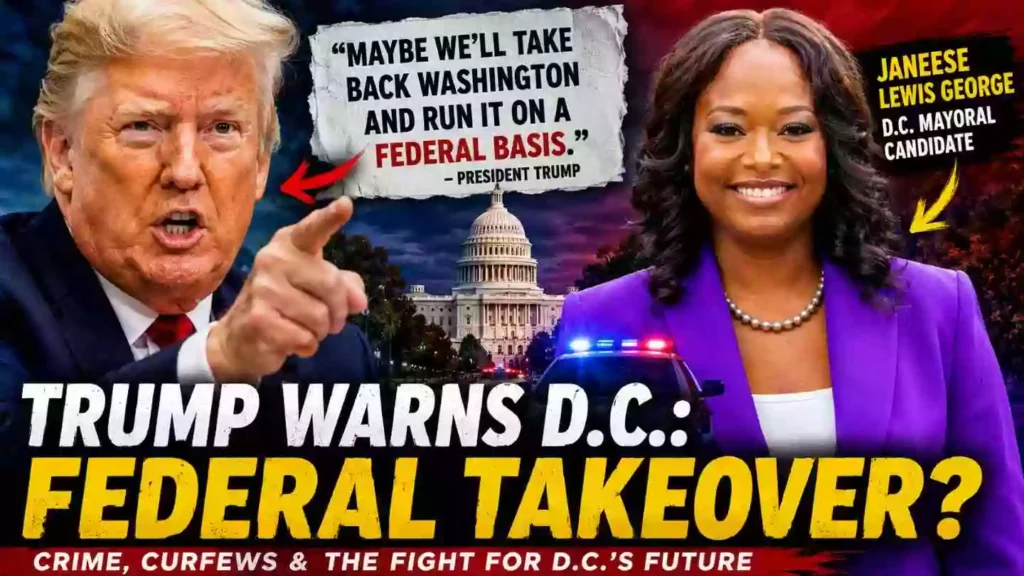
The political future of Washington, D.C., is drawing national attention after Democratic Socialist candidate Janeese Lewis George emerged as the apparent winner of the Democratic mayoral primary, prompting sharp criticism from President Donald Trump and renewed debate over crime, public safety, and federal oversight in the nation’s capital.
Speaking about the race, Trump suggested that the federal government could become more involved in Washington’s affairs if city leadership embraces policies he believes would undermine recent public safety gains.
“I wouldn’t like it, and maybe we’ll take back Washington and run it on a federal basis,” Trump said while discussing the election outcome.
The remarks quickly fueled discussion about the unique relationship between the federal government and Washington, D.C., where Congress retains significant authority over local affairs despite the city’s elected leadership.
Mayoral Race Becomes National Political Flashpoint
Lewis George, a member of the D.C. Council and a prominent progressive voice in local politics, has built her campaign around issues including criminal justice reform, housing affordability, social equity, and community investment.
Her rise reflects a broader trend seen in several major American cities, where progressive candidates have gained support among voters seeking alternatives to traditional approaches to governance.
However, critics argue that some of her policy positions could weaken public safety efforts that officials say have contributed to declining crime rates in Washington.
The mayoral contest has increasingly become a national political story, with both conservatives and progressives viewing the election as a test of competing visions for urban leadership.
Crime Reduction Efforts at Center of Debate
Supporters of current law enforcement policies point to significant reductions in violent crime, homicides, robberies, and carjackings as evidence that existing strategies are working.
Federal officials have highlighted thousands of arrests and the removal of illegal firearms from city streets as part of broader efforts to improve public safety throughout the District.
During recent public discussions, officials argued that Washington has become safer in recent years and warned against reversing policies they believe contributed to those improvements.
“The president made D.C. safe and beautiful,” one federal official said during a televised discussion, crediting the administration’s law enforcement initiatives for helping reduce crime.
Supporters of Lewis George, however, contend that long-term public safety requires investments in communities, youth programs, education, and economic opportunity in addition to policing.
Disagreements Over Criminal Justice Reform
One of the primary points of contention involves criminal justice policy.
Critics have pointed to Lewis George’s previous opposition to certain detention and sentencing measures, arguing that tougher consequences are necessary for repeat offenders and violent criminals.
Progressive advocates counter that reform efforts are intended to create a fairer justice system while addressing underlying causes of crime. They argue that public safety and civil rights can be pursued simultaneously through evidence-based policies.
The debate reflects larger national conversations about bail reform, pretrial detention, youth crime, and the role of law enforcement in American cities.
Federal Presence and Curfew Policies Draw Scrutiny
Another major issue in the campaign involves the role of federal law enforcement agencies and emergency curfew measures.
Lewis George has expressed concerns about the presence of federal agents in Washington and has questioned policies that she believes disproportionately impact young residents.
Supporters of emergency curfews argue that they help prevent violence and maintain order during periods of heightened public safety concerns.
Opponents contend that such measures can unfairly target young people and risk expanding government authority without addressing root causes of crime.
The disagreement has become a focal point in the mayoral campaign as candidates offer competing approaches to public safety.
What’s Next for Washington?
With the general election approaching, voters will determine whether Washington continues its current public safety strategy or embraces a more progressive policy agenda.
The outcome could have implications beyond the District, as cities across the country grapple with questions surrounding crime reduction, criminal justice reform, housing challenges, and government accountability.
As political attention intensifies, Washington’s mayoral race is shaping up to be one of the most closely watched local elections in the United States, highlighting broader national debates over the future direction of America’s cities.
#WashingtonDC #JaneeseLewisGeorge #DonaldTrump #DCMayor #USPolitics #CrimeReduction #PublicSafety #CriminalJustice #FederalGovernment #BreakingNews