
Marco Rubio Warns Cuba Remains a Serious US National Security Threat
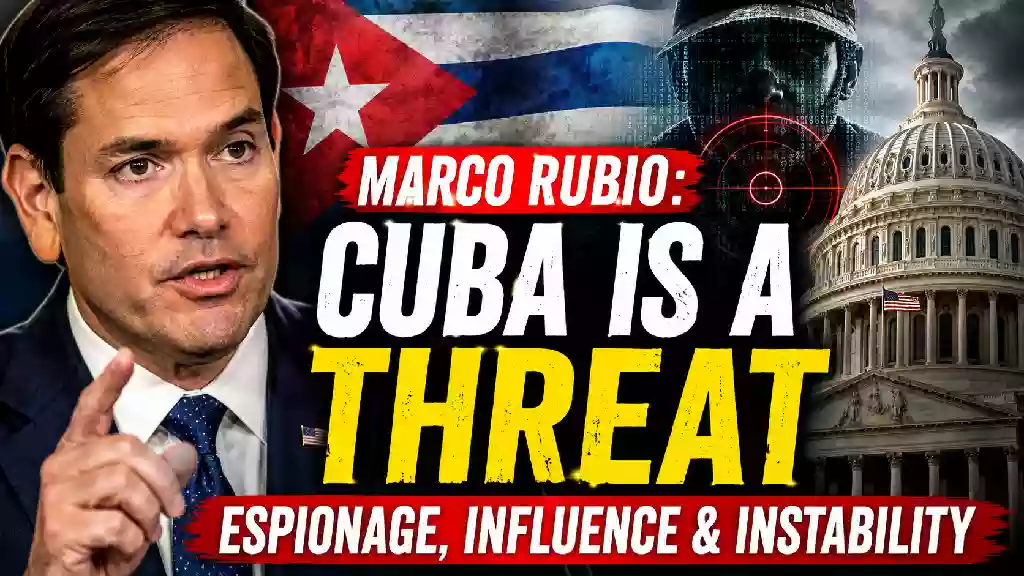
Secretary of State Marco Rubio discusses a State Department report warning that Cuba's intelligence operations and regional influence remain significant national security concerns for the United States, highlighting espionage, geopolitical competition, and foreign policy challenges.
Marco Rubio Warns Cuba Remains a Serious US National Security Threat
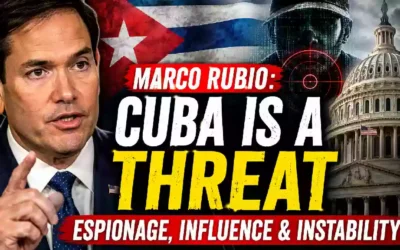
Secretary of State Marco Rubio defends a new State Department report alleging Cuba continues to play a major role in espionage influence operation and regional instability
Secretary of State Marco Rubio is urging Americans not to underestimate Cuba’s role in global intelligence and influence operations, pointing to a newly released State Department report that describes the communist-led island as a continuing national security concern for the United States. During a wide-ranging interview, Rubio argued that Cuba’s intelligence capabilities, regional political influence, and alliances with U.S. adversaries make it a threat that deserves far greater public attention.
State Department Report Highlights Cuba’s Intelligence Activities
The discussion centered on a 100-page State Department report that characterizes Cuba as a major hub for communist influence in the 21st century. According to Rubio, the report documents decades of Cuban espionage, intelligence gathering, and political influence operations that have extended well beyond the island nation’s borders.
Rubio said many Americans view Cuba as a small Caribbean country with limited global influence, but he argued that its intelligence services have consistently demonstrated an ability to penetrate foreign governments and build networks of influence.
“Cuba is only about 90 miles from the United States, but its intelligence operations have had an outsized impact for decades,” Rubio said, emphasizing that the country’s geographic proximity makes the issue particularly significant for U.S. policymakers.
Rubio Points to Historical Espionage Cases
During the interview, Rubio referenced several well-known espionage cases involving individuals convicted of spying on behalf of Cuba, arguing that they demonstrate the country’s long-standing intelligence capabilities.
He said Cuba has repeatedly succeeded in placing intelligence assets inside sensitive U.S. government institutions, describing those incidents as some of the most significant intelligence failures in American history. Rubio argued that these examples illustrate why Cuba should continue to be viewed as a serious national security concern despite its relatively small population.
Report Examines Cuba’s Regional Political Influence
Beyond espionage, Rubio said the State Department report examines Cuba’s role in supporting left-wing political movements and revolutionary groups throughout Latin America over several decades.
According to Rubio, the report concludes that Havana has provided political, ideological, and organizational support to movements that have challenged governments across the region. He said understanding those historical relationships is essential to evaluating Cuba’s broader geopolitical influence.
Rubio also cited the report’s claims regarding activist networks operating internationally, arguing that some organizations are more coordinated than they appear publicly. Those claims have drawn criticism from some observers, while Rubio maintained that the report is based on documented intelligence and historical evidence.
Rubio Rejects Criticism of the Report
Responding to critics who argue the report overstates Cuba’s influence, Rubio defended its findings, saying the document is grounded in factual information gathered by the U.S. government.
He acknowledged that opinions differ on how Washington should respond to Cuba, but insisted that disagreements over policy should not prevent Americans from recognizing what he described as legitimate security concerns. Rubio also noted that Cuba’s close alignment with governments considered adversarial to the United States adds another layer to the broader national security discussion.
Venezuela’s Democratic Recovery Remains a Long-Term Goal
The interview also shifted to Venezuela, where Rubio discussed the country’s ongoing political transition.
He said rebuilding democratic institutions after decades of political turmoil will require patience, economic recovery, and national reconciliation before credible elections can fully restore public confidence.
Rubio added that Venezuela’s recent earthquake has complicated recovery efforts but said the United States remains committed to supporting stability and encouraging conditions that allow for long-term democratic governance and economic investment.
Managing Competition Between the United States and China
Rubio also addressed U.S.-China relations, describing the relationship as one that combines strategic competition with the need for continued diplomatic communication.
He said Washington must remain firm in protecting American interests while maintaining direct dialogue with Beijing to reduce the risk of misunderstandings between the world’s two largest economies and military powers. Rubio emphasized that open communication remains essential even as both countries compete in key areas of global influence.
Discussing Taiwan, Rubio reiterated the U.S. position opposing any forced change to the current status quo while acknowledging that the issue remains one of the most sensitive points in U.S.-China relations.
Growing Global Challenges Require Long-Term Strategy
Closing the interview, Rubio said today’s international environment is evolving rapidly, requiring the United States to confront both traditional security threats and emerging geopolitical challenges.
He argued that issues involving Cuba, China, Iran, and regional instability across the Western Hemisphere will continue shaping American foreign policy for years to come. While global tensions have become more visible because of instant communication and worldwide media coverage, Rubio said maintaining U.S. national security will require sustained diplomatic engagement, economic strength, and strategic leadership.
#MarcoRubio #Cuba #NationalSecurity #StateDepartment #Espionage #ForeignPolicy #China #Venezuela #WorldNews