
Iran Reportedly Urges Trump to Halt U.S. Bombing Campaign as Middle East Tensions Escalate
Iran Reportedly Urges Trump to Halt U.S. Bombing Campaign as Middle East Tensions Escalate
U.S. Launches Major Strikes Across Iran
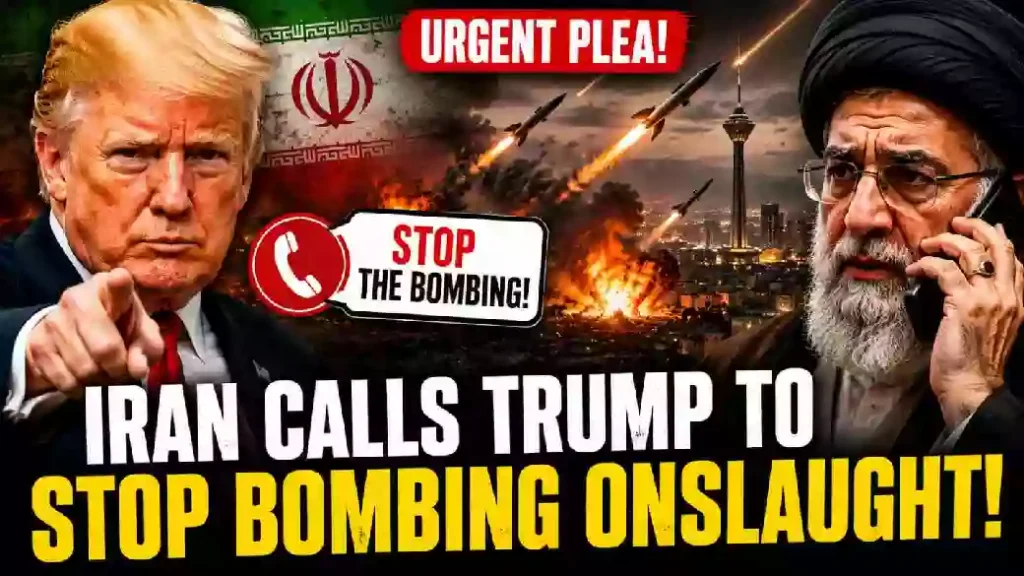
Tensions in the Middle East reached a new level after the United States launched a series of powerful military strikes against Iranian targets, prompting reports that Iranian officials directly contacted President Donald Trump in an effort to stop the escalating bombing campaign.
According to reports from Tel Aviv, U.S. Central Command (CENTCOM) carried out coordinated attacks on Iranian military infrastructure, targeting surveillance systems, communication networks, and air defense installations across the country. The strikes represent one of the most significant U.S. military actions against Iran in recent years and signal a dramatic escalation in the ongoing conflict.
President Trump reportedly confirmed that 49 Tomahawk missiles were launched against strategic Iranian targets, including locations situated within close proximity to Tehran, Iran’s capital city. The strikes also targeted positions in southwestern Iran, with the administration describing the operation as both “violent” and “vicious.”
Trump Claims Iranian Leaders Requested End to Bombing
One of the most notable developments emerging from the crisis is President Trump’s assertion that senior Iranian officials personally contacted him, requesting that the United States halt further military action.
While Iranian authorities have reportedly disputed these claims, Trump maintains that direct communication occurred during high-level discussions inside the White House Situation Room.
The revelation highlights the growing pressure facing Iranian leadership as the country’s military infrastructure continues to come under attack. Analysts suggest that any direct communication between Washington and Tehran could signal behind-the-scenes diplomatic efforts aimed at preventing a broader regional war.
Iran Responds With Missile and Drone Attacks
In retaliation for the U.S. strikes, Iran reportedly launched ballistic missiles and drones targeting Gulf nations, including Bahrain and Kuwait. Regional military forces quickly responded to the threats.
The Jordanian military announced that it intercepted and neutralized at least 20 Iranian ballistic missiles that crossed through Jordanian airspace. The attacks underscore the widening scope of the conflict and raise concerns that neighboring countries could become increasingly involved.
Iran’s Foreign Ministry stated that the latest U.S. military action has effectively rendered any previous ceasefire agreements meaningless, further diminishing hopes for an immediate diplomatic resolution.
Nuclear Program Remains Central Issue
The Trump administration continues to emphasize Iran’s nuclear ambitions as a key factor behind the military campaign.
Vice President J.D. Vance and other senior administration officials have reportedly been heavily engaged in negotiations aimed at securing a new agreement with Tehran. However, U.S. officials insist that Iran must abandon its nuclear ambitions, ensure freedom of navigation through the Strait of Hormuz, and reduce regional hostilities before any long-term settlement can be achieved.
President Trump reportedly warned that additional military strikes would follow if Iran refuses to accept the terms currently being offered.
The administration has also indicated that future targets could potentially include critical infrastructure such as power plants and bridges, actions that would represent a substantial escalation of military operations.
Strategic Importance of the Strait of Hormuz
A major focus of the ongoing conflict remains the Strait of Hormuz, one of the world’s most important oil shipping routes.
According to statements attributed to President Trump, U.S. forces have been conducting covert operations since May to help secure maritime traffic through the strategic waterway. Reports suggest that approximately 200 vessels carrying over 100 million barrels of oil have safely navigated the region under U.S. protection.
Energy markets have been closely monitoring developments in the Gulf. While oil prices have risen amid uncertainty, analysts note that prices have remained lower than some forecasts expected given the scale of the military confrontation.
Experts argue that maintaining open shipping lanes through the Strait of Hormuz is critical to preventing severe disruptions in global energy supplies and protecting economic stability.
Military Pressure and Diplomatic Negotiations Continue
Former national security officials have suggested that the Trump administration is attempting to combine military pressure with diplomatic outreach in an effort to force concessions from Iran.
Supporters of the strategy argue that demonstrating overwhelming military capability may persuade Iranian leadership to accept stricter conditions without requiring a large-scale ground invasion. Critics, however, warn that continued escalation increases the risk of a prolonged regional conflict involving multiple nations.
As military operations continue, questions remain about whether the current campaign will ultimately lead to a negotiated agreement or trigger broader instability throughout the Middle East.
What Happens Next?
The coming days may prove decisive for the future of U.S.-Iran relations. With military strikes continuing, retaliatory attacks expanding across the region, and diplomatic channels reportedly remaining open, the situation remains highly volatile.
President Trump has indicated that further action remains on the table if Iran does not meet U.S. demands. Meanwhile, Iranian officials continue to reject many of Washington’s conditions, creating uncertainty about whether a peaceful resolution can be achieved.
As the conflict unfolds, global leaders, energy markets, and regional allies will be watching closely for signs of either de-escalation or a deeper military confrontation that could reshape the geopolitical landscape of the Middle East.
#Iran #Trump #MiddleEast #USMilitary #Tehran #BreakingNews #Geopolitics #StraitOfHormuz #IranConflict #WorldNews