
Stephen A Smith Says Democrats Risk Losing Working-Class Voters as Zohran Mamdani’s Populist Message Gains Momentum
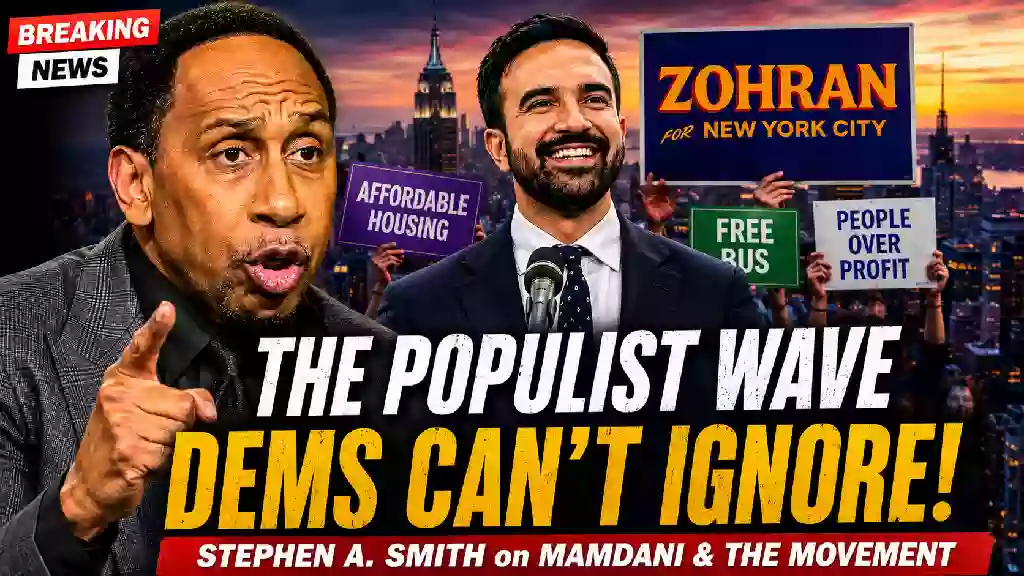
Stephen A Smith Says Democrats Risk Losing Working-Class Voters as Zohran Mamdani’s Populist Message Gains Momentum
Political Analyst Warns Democratic Party Faces Growing Internal Divide Ahead of Future Elections
Political commentator Stephen A. Smith believes the Democratic Party is facing a critical crossroads as rising progressive figures like Zohran Mamdani attract voters with a message centered on affordability, economic frustration, and the belief that America’s working class has been left behind.
Speaking during a political discussion, Smith argued that the debate over ideological labels such as “democratic socialist” misses the larger issue. Instead, he suggested voters are responding to candidates who acknowledge their financial struggles and promise a different direction after years of dissatisfaction with traditional political leadership.
Smith said Mamdani has become an effective messenger because he focuses on everyday concerns rather than ideological debates, helping him connect with younger voters seeking change.
Affordability and Economic Anxiety Drive Political Support
According to Smith, affordability remains one of the most powerful political issues in America today.
He noted that Mamdani consistently speaks about housing costs, transportation, and the financial pressures facing ordinary families. Smith argued that many voters feel ignored by both major political parties and are increasingly willing to support candidates who offer alternatives to the political establishment.
“The message is that working-class Americans have been forgotten,” Smith suggested during the discussion, adding that many voters are responding positively to candidates who acknowledge those concerns.
He also pointed out what he considers an irony within modern Democratic politics. Historically, Democrats built their identity around representing working-class Americans, but Smith believes many of those voters have shifted toward conservative candidates in recent election cycles.
Mamdani’s Rise Reflects Larger Democratic Challenges
While praising Mamdani’s communication skills, Smith cautioned against viewing his political success as a nationwide referendum.
He observed that turnout in local Democratic primary elections remains relatively low and argued that broader statewide or presidential elections require much wider support.
Still, Smith believes Mamdani has successfully capitalized on growing dissatisfaction within the Democratic Party, particularly among younger voters.
His connections with progressive leaders, including Alexandria Ocasio-Cortez (AOC) and Bernie Sanders, have also helped strengthen his appeal among progressive activists.
Rather than focusing solely on one candidate, Smith argued that the broader populist movement inside the Democratic Party is becoming increasingly influential ahead of future elections.
Voters Want Change, Not More Political Promises
Smith also discussed the public’s growing frustration with long-time political leaders.
Referencing former New York Governor Andrew Cuomo, he said establishment politicians often argue that ambitious proposals are unrealistic. However, Smith believes many voters are no longer persuaded by arguments explaining why change cannot happen.
Instead, frustrated Americans are increasingly supporting candidates who promise something different—even if those proposals face significant political or economic challenges.
He argued that decades of rising national debt, persistent inflation, and concerns about affordability have fueled public skepticism toward career politicians from both major parties.
According to Smith, many younger voters feel they are inheriting economic problems created over multiple administrations and are willing to take political risks in hopes of achieving meaningful reform.
Republicans Also Face Political Headwinds
Although much of the discussion focused on Democratic politics, Smith argued Republicans should not assume they are immune from voter frustration.
He suggested that voters increasingly judge politicians based on whether their policies improve everyday economic conditions rather than party affiliation.
Smith also criticized perceptions that wealthy political figures and major technology executives continue to prosper while ordinary Americans struggle with rising living costs.
He argued that concerns surrounding wealth inequality, inflation, and government spending could become significant campaign issues in future elections.
Democratic Unity Could Determine Future Elections
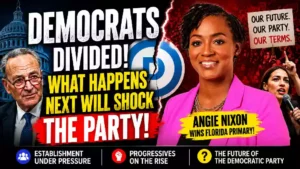
Looking ahead, Smith predicted the Democratic Party will need to resolve internal divisions between progressive activists and more moderate members if it hopes to remain competitive nationally.
He questioned which leaders will ultimately unite the party, suggesting that continued infighting could weaken Democratic electoral prospects.
At the same time, Smith argued that the growing populist movement within Democratic politics cannot simply be dismissed, as it reflects genuine voter frustration over economic issues and dissatisfaction with the political status quo.
Whether that movement reshapes Democratic leadership or remains a powerful faction within the party may become one of the defining political stories heading into future election cycles.
#StephenASmith #ZohranMamdani #DemocraticParty #Politics #Election2026 #WorkingClass #ProgressivePolitics #AndrewCuomo #BernieSanders #AOC