
Democratic Party Faces an Internal Revolt as Progressive Wing Pushes for Power
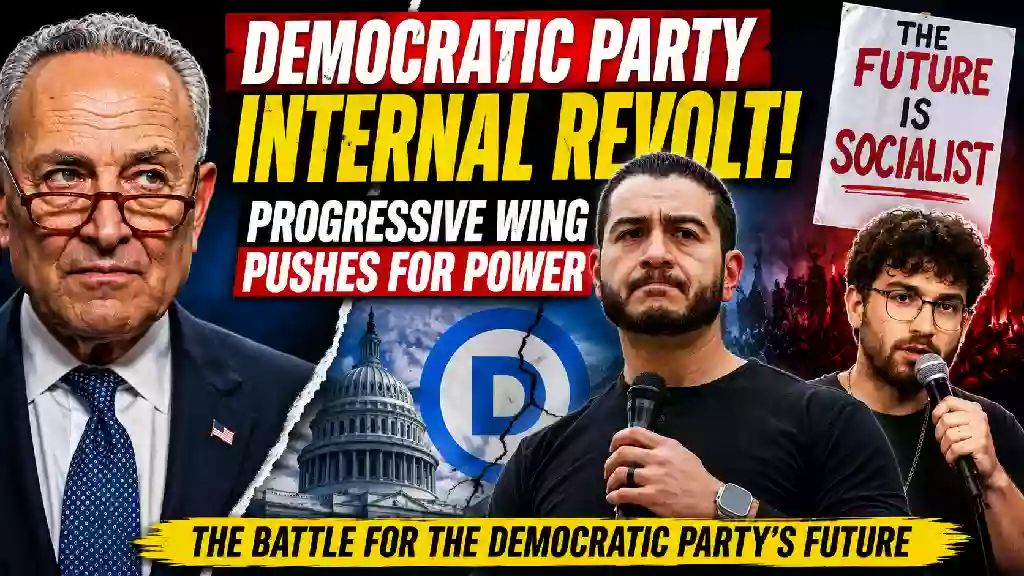
Democratic Party Faces Growing Internal Power Struggle as Progressive Wing Pushes for Influence in 2026.
Democratic Party Faces an Internal Revolt as Progressive Wing Pushes for Power
Inside the Democratic Party’s Growing Power Struggle Over Its Future
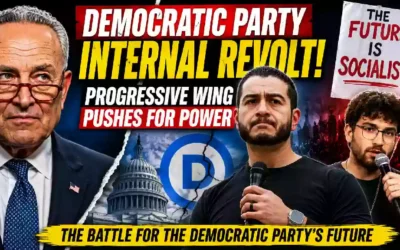
The Democratic Party is facing a growing internal battle over its political direction as progressive candidates challenge the party establishment and debate intensifies over economics, immigration, health care and the role of government.
The divide was highlighted during a political discussion featuring National Review columnist Caroline Downey and Fox News political analyst Gianna Caldwell, who argued that the Democratic Party is experiencing a significant ideological shift. Downey described the movement as an “insurgency” and said the conflict could reshape the party if progressive candidates continue gaining influence.
The comments come as progressive candidates have increasingly challenged more established Democrats in 2026 primary contests. Other recent political coverage has similarly described a growing confrontation between the Democratic establishment and candidates associated with the party’s progressive and democratic-socialist wing.
A Fight Over the Democratic Party’s Future
According to Downey, the current conflict goes beyond an ordinary disagreement over policy. She argued that some Democratic leaders are choosing to accommodate progressive candidates rather than directly confront the ideological changes taking place within the party.
Downey also pointed to what she described as a significant change in the Democratic Party’s relationship with capitalism and free enterprise. She argued that those principles were once less controversial across the two major parties but have become a more pronounced point of disagreement.
The characterization is strongly contested. Other political voices have described the rise of progressive candidates as a legitimate effort to move the Democratic Party in a new direction rather than a hostile takeover. Recent CNN coverage, for example, described the movement as a challenge to the party establishment driven by younger and more progressive voters.
Michigan Becomes a Key Test
Michigan has become one of the states at the center of the Democratic Party’s internal debate.
The discussion highlighted Abdul El-Sayed and his campaign as an example of the ideological tensions developing within the party. At the time of the discussion, the speakers described the Michigan contest as highly competitive, citing polling that placed the candidates at roughly 46 percent each.
El-Sayed’s political associations also became part of the debate. The discussion focused on his appearance with online commentator Hasan Piker, with former Democratic Rep. Debbie Dingell urging El-Sayed to make clear where he stands on statements attributed to Piker.
The controversy illustrates how candidates’ political alliances and public appearances can become campaign issues, particularly in closely contested races.
Affordability Is Driving Voter Concerns
While ideological divisions are receiving considerable attention, the discussion also emphasized an issue likely to matter directly to voters: affordability.
The speakers cited polling showing affordability as the leading concern among voters, with immigration ranking second.
The conversation then turned to wages, inflation and purchasing power. The speakers cited figures they said showed inflation-adjusted wages declining during the Biden administration before improving during the first year and a half of the Trump administration.
Those figures should be independently verified before being presented as definitive economic measurements. Nevertheless, the broader political message is clear: Democrats and Republicans are competing to convince voters that their economic policies can make everyday life more affordable.
The Progressive Economic Agenda
The debate also focused on how Democrats should address rising costs.
Caldwell criticized proposals involving expanded government benefits, greater government intervention and Medicare for All. She argued that a national single-payer health care system would require substantial taxation and contended that middle-class taxpayers could ultimately bear part of that burden.
Progressive Democrats, however, have argued that government programs and expanded public services can provide greater economic security for working- and middle-class Americans. Recent reporting on the progressive movement shows that issues such as universal health care, child care and expanded social programs are central to many insurgent campaigns.
That disagreement represents one of the clearest ideological fault lines within the Democratic Party.
Immigration Adds Another Layer to the Conflict
Immigration remains another major political dividing line.
The discussion criticized sanctuary policies and argued that state and local governments should cooperate with federal immigration authorities. The speakers referenced a Virginia case involving a person who allegedly had a deportation order and was later arrested in connection with allegations involving fentanyl near a school.
Because the claims were presented during a political discussion, they should be independently verified before publication as established facts.
The larger debate, however, reflects a significant disagreement over immigration enforcement. Republicans have generally emphasized stricter enforcement and cooperation with federal authorities, while many Democrats and progressive activists have criticized aggressive immigration enforcement and supported stronger protections for undocumented immigrants.
A Defining Moment for Democrats
The Democratic Party’s internal debate could become one of the defining political stories of the 2026 election cycle.
Progressive candidates argue that the party needs new leadership, stronger economic policies and a more aggressive approach to issues affecting working-class voters. Establishment Democrats face the challenge of determining how much of that agenda can be embraced without alienating moderates and independent voters.
Meanwhile, Republicans are likely to highlight divisions within the Democratic Party as they campaign for control of Congress and other offices.
For Democrats, the question is no longer simply whether progressive candidates can win individual races. The bigger question is whether their success signals a lasting transformation of the party.
As the 2026 election season continues, voters will ultimately decide whether the Democratic Party’s progressive shift represents a temporary political movement or the beginning of a fundamentally different Democratic coalition.
#DemocraticParty #Democrats #2026Election #USPolitics #PoliticalNews #ProgressivePolitics #MichiganPolitics #Election2026 #Affordability #Immigration #ICE #Inflation