
Meta Agrees to Massive Settlement as Facebook and Instagram Face Sweeping New Teen Safety Rules

Meta’s proposed nearly $17 billion settlement could bring major new teen safety rules to Facebook and Instagram, including screen-time limits, overnight restrictions and stricter age verification.
Meta Agrees to Massive Settlement as Facebook and Instagram Face Sweeping New Teen Safety Rules
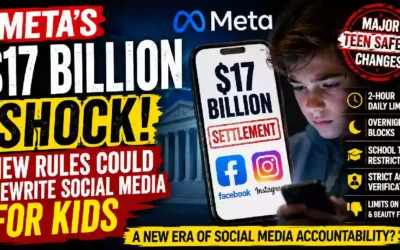
Meta’s $17 Billion Shock: New Rules Could Rewrite Social Media for Kids
Meta’s proposed settlement with 29 states could introduce sweeping new restrictions on how children and teenagers use Facebook and Instagram, including screen-time limits, overnight access blocks and stricter age verification.
Meta has agreed to a landmark settlement that could fundamentally change how children and teenagers use Facebook and Instagram in the United States. The agreement, reached during a federal trial in California, calls for Meta to pay nearly $17 billion to 29 states while introducing a broad package of new teen safety measures. Meta has denied wrongdoing in the case.
While the massive financial figure has drawn attention, the most significant consequences for American families could come from the proposed changes to the way young users access and interact with Meta’s platforms.
Two-Hour Daily Social Media Limit Proposed
One of the most notable provisions would establish a two-hour daily limit for young users, with pauses included during that period. The proposed restrictions are aimed at addressing concerns surrounding excessive screen time and potentially addictive social media use among children and teenagers.
The agreement could give parents additional tools to manage how much time their children spend on Facebook and Instagram. Instead of relying entirely on parents to enforce screen-time rules, the proposed framework would place greater responsibility on the social media company itself.
That could represent a major shift in the relationship between parents and technology platforms.
Facebook and Instagram Could Be Blocked Overnight
The proposed settlement would also restrict social media access during overnight hours.
Under the framework, access would be blocked between midnight and 6 a.m., unless parental approval is provided. Notifications would also reportedly be turned off during school hours.
For families dealing with teenagers staying up late on social media, the overnight restrictions could become one of the most noticeable changes.
The measures are designed to address concerns about late-night social media use and the broader effects of excessive engagement with digital platforms.
Stricter Age Verification Is Coming
Another major part of the proposed agreement focuses on age verification.
The settlement calls for stronger systems designed to determine whether young users meet the appropriate age requirements for the platforms. The specific technology that would ultimately be used has not yet been established.
The proposed age-verification requirements would also face independent oversight. An auditor would reportedly be able to examine Meta’s data involving Facebook and Instagram to determine whether the company is complying with the settlement.
That oversight could become an important component of the agreement because compliance would be subject to external review.
Beauty Filters and Like Counts Could Be Limited
The proposed changes go beyond screen time and age restrictions.
The framework would also address certain social comparison features, including beauty filters and visible like counts. Such features have been part of broader concerns about how social media affects young users and encourages comparisons involving appearance and popularity.
Reducing these features could change the experience teenagers have when using Facebook and Instagram and potentially reduce some of the pressures associated with social media engagement.
Meta Wants Other Social Media Platforms to Follow
Although the settlement directly concerns Meta, the company is also calling on other major platforms to adopt similar protections.
Meta Chief Legal Officer C.J. Mahoney specifically called on TikTok and YouTube to implement the proposed framework, arguing that teenagers move between numerous apps and that meaningful protection requires an industry-wide approach.
That could put additional pressure on competing platforms to introduce their own safeguards for younger users.
The argument is straightforward: restrictions on one platform may have limited impact if teenagers can simply move to another service with fewer restrictions.
Could Meta’s Settlement Become an Industry Blueprint?
The proposed agreement could become a significant model for future social media regulation and child online safety.
The 29 states involved were seeking not only financial compensation but also changes to the way social media companies operate when children use their platforms. Meta’s decision to settle could potentially establish a framework that other companies will face pressure to consider.
For parents, the proposed changes could mean less responsibility for personally policing every aspect of their children’s social media use. Screen-time limits, overnight restrictions, age verification and additional content controls could increasingly become responsibilities of the platforms themselves.
The settlement is still subject to judicial approval, so the final terms and implementation could change. But if approved, the agreement could become one of the most significant developments yet in the debate over children, social media addiction and technology accountability.
The biggest question now is whether other social media giants will follow Meta’s lead—or whether regulators and courts will ultimately force them to do so.
#Meta #Facebook #Instagram #TeenSafety #ChildSafety #SocialMedia #SocialMediaAddiction #OnlineSafety #ParentalControls #AgeVerification #TikTok #YouTube #TechNews