
Obama Questions Prospects of New Iran Agreement as Negotiations Continue
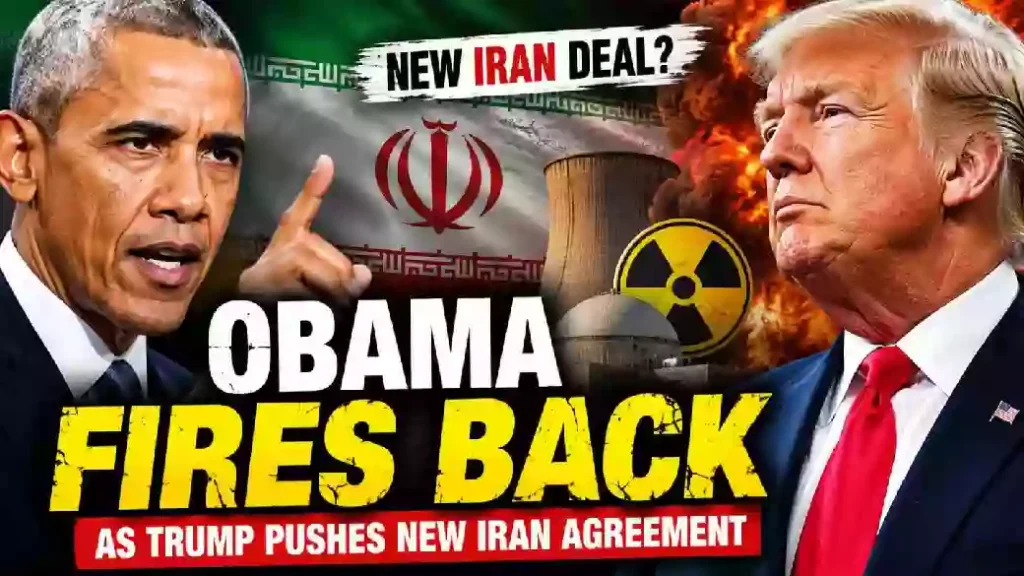
Obama Questions Prospects of New Iran Agreement as Negotiations Continue
Former President Says New Framework May Resemble Earlier Nuclear Deal
A renewed debate over U.S. policy toward Iran has emerged as President Donald Trump reportedly pursues a new diplomatic framework involving Tehran while attending international meetings and discussions with world leaders.
According to reports referenced during a recent Fox News discussion, the proposed framework could allow Iran to continue limited uranium enrichment for civilian purposes while broader negotiations continue over nuclear restrictions, sanctions, and regional security concerns.
Former President Barack Obama expressed skepticism that any future agreement would differ significantly from the nuclear deal negotiated during his administration, arguing that the original agreement had functioned for several years before the United States withdrew from it.
“It is doubtful that any agreement that arises is going to be significantly different or a significant improvement from the deal that we had in the first place,” Obama said in remarks discussed during the broadcast.
Debate Over How Conditions Have Changed
Supporters of President Trump argue that the circumstances surrounding any future agreement are significantly different from those that existed during the Obama administration.
During the Fox News segment, commentator Mark Thiessen contended that years of regional conflict, military operations, economic sanctions, and diplomatic pressure have altered Iran’s position and could provide negotiators with greater leverage than was available during earlier talks.
Thiessen argued that Iran’s military capabilities and regional influence have been weakened by recent developments, though assessments of those impacts vary among analysts and governments.
The discussion reflects a broader disagreement that has existed for years in Washington over whether diplomacy, economic pressure, military deterrence, or a combination of all three offers the best path toward preventing Iran from developing nuclear weapons.
Details of Potential Agreement Remain Unclear
One of the key points raised during the discussion was that few official details about any potential agreement have been publicly released.
Commentators referenced several possible areas that could become part of future negotiations, including:
- Iran’s nuclear enrichment activities.
- Potential sanctions relief tied to compliance.
- The status of frozen Iranian assets.
- Maritime traffic through the Strait of Hormuz.
- Regional ceasefire arrangements and security concerns.
- Verification and enforcement mechanisms.
However, participants in the discussion acknowledged that many of these issues remain under negotiation and that no finalized agreement has been publicly unveiled.
As a result, many questions remain unanswered regarding what specific commitments each side may ultimately be required to make.
Questions About Enforcement and Long-Term Stability
Another topic raised during the discussion involved the long-term durability of any agreement.
Critics of previous agreements have argued that changes in political leadership can affect how treaties and diplomatic arrangements are enforced. Supporters of stronger restrictions on Iran maintain that future compliance mechanisms must be robust enough to withstand changes in administrations and shifting geopolitical circumstances.
Others have expressed concern that economic incentives, sanctions relief, or the release of frozen assets could strengthen Iran’s government if implemented before long-term compliance is fully verified.
Supporters of diplomatic engagement, meanwhile, often argue that negotiated agreements can provide greater transparency, monitoring, and opportunities to reduce tensions than continued confrontation alone.
These competing viewpoints continue to shape the national conversation surrounding Iran policy.
Regional Security Concerns Remain Central
Beyond questions involving nuclear enrichment, regional security remains a major factor in ongoing discussions.
Iran’s relationships with various groups throughout the Middle East continue to draw scrutiny from policymakers in the United States, Israel, and other allied nations. Analysts frequently note that even if progress is achieved on nuclear issues, disagreements involving regional conflicts and security arrangements could complicate future negotiations.
The situation remains particularly sensitive because events in one part of the region can quickly influence broader diplomatic efforts.
As negotiations continue, regional stability will likely remain a central consideration for all parties involved.
A Continuing Foreign Policy Debate
The differing perspectives expressed by Obama and supporters of Trump highlight two distinct approaches to American foreign policy.
Obama has long advocated for diplomatic engagement and international agreements as tools for reducing tensions and limiting nuclear proliferation. Trump and many of his supporters have emphasized economic pressure, sanctions, and military deterrence as critical components of successful negotiations.
At this stage, however, many of the details surrounding any potential agreement remain unknown.
Until additional information is released, observers across the political spectrum are likely to continue debating whether a new agreement would represent a meaningful departure from previous efforts or a revised version of policies pursued in earlier administrations.
For now, attention remains focused on ongoing negotiations and whether they can produce a framework capable of addressing both nuclear concerns and broader regional security challenges.
#DonaldTrump #BarackObama #Iran #IranNegotiations #ForeignPolicy #WorldNews #MiddleEast #InternationalRelations #Geopolitics #NuclearDeal