

Potential Life Beyond Earth: New Discoveries UFO Sightings and the Search for Extraterrestrial Intelligence
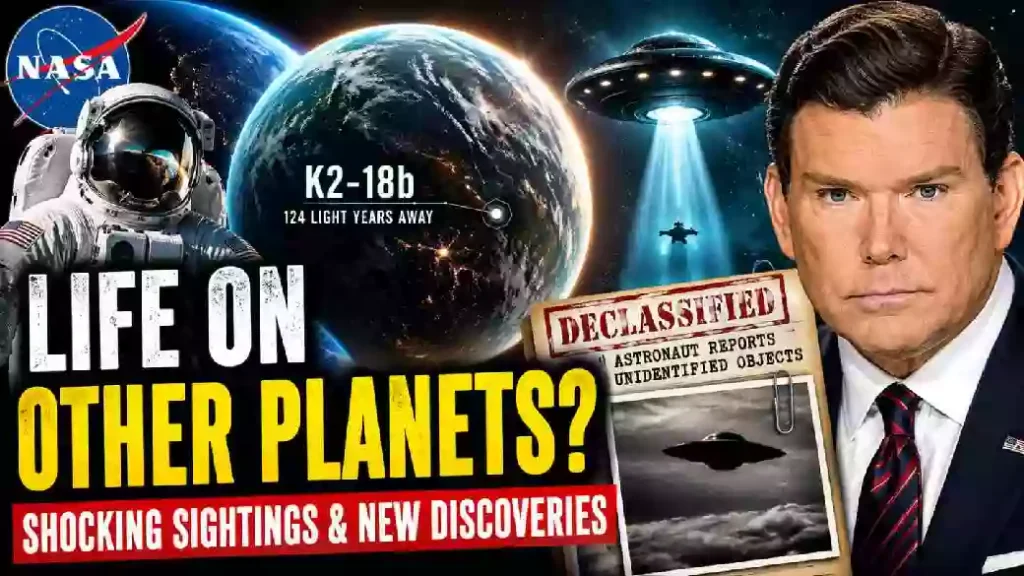
Potential Life Beyond Earth: New Discoveries UFO Sightings and the Search for Extraterrestrial Intelligence
NASA’s Ongoing Search for Life Beyond Earth
The search for life beyond Earth continues to captivate scientists, astronomers, and the public alike. As NASA and other space agencies push the boundaries of exploration, new discoveries are fueling speculation about whether humanity is truly alone in the universe. While NASA officials maintain that no definitive evidence of extraterrestrial life has been found, recent scientific breakthroughs and newly declassified reports have renewed interest in the possibility of life on other planets.
With an estimated two trillion galaxies and countless stars spread across the cosmos, the odds of life existing elsewhere appear increasingly compelling. Scientists believe there could be hundreds of potentially habitable worlds capable of supporting life, making the search for extraterrestrial intelligence one of the most exciting scientific endeavors of our time.
K2-18b: The Most Promising Exoplanet Yet?
One of the most significant developments in recent years involves the exoplanet K2-18b, located approximately 124 light-years from Earth. Using advanced observations from the James Webb Space Telescope, researchers led by the University of Cambridge identified chemical signatures that have sparked intense scientific interest.
The detected compounds are typically associated with biological processes on Earth, leading some researchers to consider K2-18b one of the strongest candidates for hosting extraterrestrial life. Although scientists caution that further analysis is required, the findings represent a major step forward in the search for habitable planets beyond our solar system.
Experts say that discovering life elsewhere would revolutionize our understanding of humanity’s place in the universe. Such a breakthrough could provide critical insights into how life develops and evolves under different cosmic conditions.
The Challenge of Interstellar Travel
Despite exciting discoveries, reaching potentially habitable worlds remains a monumental challenge. NASA’s Parker Solar Probe currently holds the record as the fastest human-made spacecraft, traveling at speeds exceeding 430,000 miles per hour.
Even at that incredible velocity, scientists estimate it would take roughly 200,000 years to reach K2-18b. These immense distances highlight one of the greatest barriers to space exploration and underscore the technological limitations facing humanity.
The vast scale of the universe often leads researchers to believe that life may exist elsewhere while simultaneously recognizing how difficult it would be for civilizations to interact across such enormous distances.
Declassified NASA and Government Records Spark Interest
Adding to the mystery surrounding extraterrestrial life are recently declassified government documents detailing unexplained observations made by astronauts during space missions.
The records include audio recordings, photographs, and mission transcripts from the 1960s and 1970s. In several instances, astronauts reported seeing unidentified objects, unusual particles, or unexplained phenomena while orbiting Earth or traveling through space.
While none of these reports provide definitive proof of alien life, they continue to generate debate among researchers studying Unidentified Aerial Phenomena (UAPs). Many experts argue that these observations deserve serious scientific examination rather than outright dismissal.
Astronauts Weigh In on UFO and Alien Questions
Veteran astronauts have often been asked whether they encountered extraterrestrial beings or advanced alien technology during their missions. Former astronaut Scott Kelly acknowledged public curiosity about UFOs and extraterrestrial life but stated that he never personally witnessed evidence of alien visitors while in space.
However, Kelly also recognized the possibility that advanced civilizations could exist elsewhere in the universe. If such civilizations are tens of thousands or even millions of years more advanced than humanity, their technology could potentially surpass anything currently imaginable.
These perspectives reflect a balanced scientific approach—remaining open to possibilities while demanding credible evidence before drawing conclusions.
Could UAPs Be Extraterrestrial Technology?
Some UAP researchers believe the phenomenon may involve more than conventional explanations. Theories range from advanced extraterrestrial spacecraft to concepts involving higher dimensions, space-time manipulation, and technologies far beyond current human capabilities.
Adding fuel to the discussion, previously declassified Defense Intelligence Agency reports examined theoretical concepts such as wormholes, warp drives, and stargates. While these ideas remain speculative, they demonstrate ongoing interest in overcoming the limitations of traditional space travel.
Researchers argue that if advanced technologies exist and can eventually be understood or replicated, they could transform transportation, energy production, and scientific exploration for future generations.
Transparency and Scientific Curiosity Drive the Search Forward
The mystery surrounding extraterrestrial life and UAPs remains unresolved. Scientists, lawmakers, and researchers continue calling for greater transparency and additional investigation into unexplained sightings and emerging scientific discoveries.
Whether life exists on distant exoplanets, hidden within the vast reaches of the cosmos, or remains undiscovered closer to home, the search continues to inspire humanity’s imagination. As technology advances and new data emerges, the possibility of answering one of humanity’s oldest questions—”Are we alone?”—may someday move from speculation to scientific fact.
For now, the universe remains filled with mystery, wonder, and endless opportunities for discovery.
#NASA #ExtraterrestrialLife #AlienLife #UFO #UAP #SpaceExploration #JamesWebbTelescope #K218b #Astronomy #Exoplanets