

USDA Moves Quickly After New World Screwworm Detection: Ranchers Urged to Stay Vigilant
USDA Moves Quickly After New World Screwworm Detection: Ranchers Urged to Stay Vigilant
USDA Responds Rapidly to New World Screwworm Cases in Texas
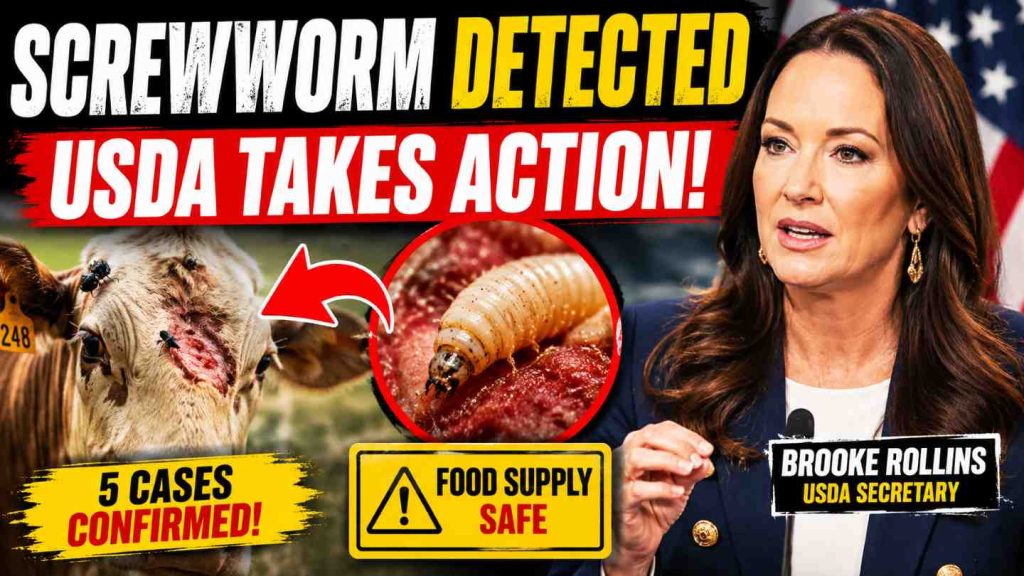
The U.S. Department of Agriculture (USDA) is taking swift action after confirming five cases of New World Screwworm (NWS) infections in cattle, goats, and dogs in South Texas. The discovery has prompted heightened monitoring efforts across the livestock industry as officials work to prevent the pest from spreading further.
Agriculture Secretary Brooke Rollins emphasized that while the situation is serious for livestock producers, the U.S. food supply remains safe and unaffected. According to USDA officials, the New World Screwworm is not a virus or disease but rather a parasitic fly that lays eggs in open wounds of animals. If detected early, the infestation can be treated effectively.
What Is the New World Screwworm?
The New World Screwworm is a destructive parasite known for causing severe damage to livestock. Female flies lay eggs in open wounds, and once the larvae hatch, they feed on living tissue. Left untreated, infestations can lead to serious health complications and even death in affected animals.
Secretary Rollins noted that the first confirmed case in Texas involved a calf that has already recovered and is expected to make a full recovery. This demonstrates that prompt identification and treatment remain key to managing the threat.
A Pest Once Eradicated Returns
The United States successfully eradicated the New World Screwworm during the 1960s through an extensive sterile fly release program. For more than six decades, the pest remained confined to parts of Central and South America.
However, officials report that the screwworm gradually moved northward in recent years. Cases began appearing in Central America around 2021 before spreading into Mexico and eventually approaching the U.S. border.
The USDA has significantly increased resources dedicated to combating the pest. According to Rollins, more than 100 personnel are now working full-time on screwworm response efforts, compared to only a handful of dedicated staff members in previous years.
Sterile Fly Program Key to Containment
One of the primary tools being used to stop the spread of the New World Screwworm is the sterile insect technique. This method involves releasing sterile male flies into affected regions. When these males mate with wild females, no viable offspring are produced, gradually reducing the pest population.
The strategy proved highly successful during the original eradication campaign in the 1960s. USDA officials are now reintroducing the program as part of a comprehensive containment effort.
New sterile fly production facilities are also being developed to support long-term eradication goals. Rollins stated that the USDA expects significant progress in pushing the pest back from U.S. territory over the coming months.
Ranchers Encouraged to Report Cases Immediately
Federal and state officials are urging livestock owners to remain vigilant and report any suspected cases immediately. Early detection is considered critical to preventing widespread outbreaks.
The USDA is working closely with Texas Governor Greg Abbott, the Texas Animal Health Commission, and local agricultural leaders to coordinate response efforts. Officials stress that ranchers should carefully inspect animals for wounds and signs of infestation, particularly in South Texas where confirmed cases have been detected.
Rapid reporting allows veterinarians and agricultural authorities to respond quickly, treat affected animals, and prevent additional spread.
Agricultural Security and Domestic Production
Beyond the screwworm outbreak, Secretary Rollins highlighted broader agricultural security concerns, including fertilizer supply chains and domestic food production.
She emphasized that agriculture plays a vital role in national security and economic stability. Recent global conflicts have highlighted vulnerabilities in fertilizer imports, prompting renewed efforts to increase domestic production capacity.
The USDA is supporting major investments in fertilizer infrastructure, including what is expected to become one of the world’s largest ammonia and fertilizer production facilities. Officials say these investments will help reduce dependence on foreign suppliers while lowering costs for American farmers.
America’s Farmers Remain Essential
As the United States approaches its 250th anniversary, Rollins praised the nation’s farmers and ranchers for their enduring contributions to the country’s success. She described agriculture as one of America’s foundational industries and stressed the importance of preserving rural communities and food production capabilities.
The USDA continues to prioritize policies aimed at supporting farmers, strengthening food security, and ensuring the long-term sustainability of American agriculture.
Conclusion
While the detection of New World Screwworm cases in Texas has raised concerns within the livestock industry, USDA officials maintain that the food supply remains safe. Through aggressive monitoring, rapid treatment protocols, and the reintroduction of sterile fly control programs, authorities are working to contain the outbreak before it spreads further.
For ranchers and livestock owners, vigilance and prompt reporting remain the most effective tools in protecting animals and helping eliminate this destructive pest once again.
#USDA #NewWorldScrewworm #AgricultureNews #TexasRanchers #LivestockHealth #CattleIndustry #FoodSecurity #AnimalHealth #Farming #Ranching