
Keane Warns Hezbollah Threat Could Undermine New Iran Talks
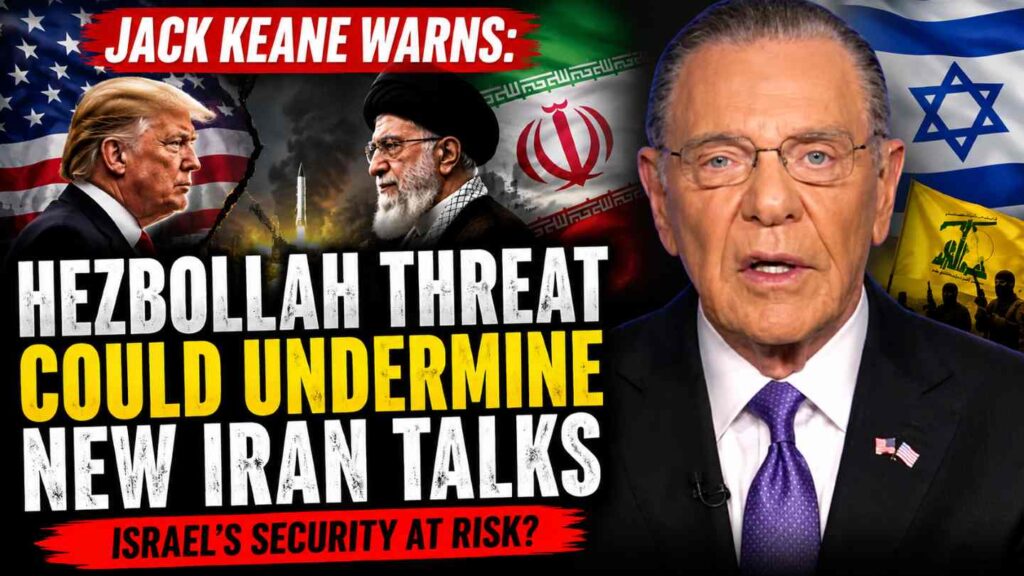
jack keane
Keane Warns Hezbollah Threat Could Undermine New Iran Talks
Former US General Says Diplomatic Push Must Not Ignore Ongoing Attacks by Iranian-Backed Forces
As the United States prepares to enter a new phase of negotiations with Iran, retired four-star General Jack Keane is warning that diplomacy alone may not be enough to address the security challenges facing the Middle East.
During a recent television interview, Keane discussed the administration decision to pursue a 60-day negotiation process with Tehran while emphasizing that Israel cannot afford to ignore continued threats from Hezbollah and other Iranian-backed groups operating along its borders.
The former Army vice chief of staff argued that while diplomatic efforts may help reduce tensions, lasting stability will require confronting the regional security issues that have fueled conflict for decades.
Focus Turns to Proposed 60-Day Iran Negotiation Window
The discussion comes after remarks indicating that a 60-day negotiating window with Iran could be underway as officials explore a broader diplomatic framework aimed at reducing tensions and establishing a path toward a broader agreement.
Supporters of the negotiations believe diplomacy offers the best opportunity to avoid additional military confrontations and reduce pressure on global energy markets.
Critics remain skeptical, pointing to Iran’s history of supporting proxy organizations across the Middle East and questioning whether meaningful changes in behavior will result from renewed talks.
Iran’s leadership has publicly signaled support for participation in the discussions while maintaining that Iranian national interests and regional priorities must remain protected throughout the process.
Why U.S. Strategy Appears to Be Shifting
According to Keane, the administration’s approach reflects a transition away from military pressure and toward economic and diplomatic objectives.
He argued that concerns surrounding global oil supplies, energy prices, and the potential economic consequences of a wider regional conflict contributed to the policy shift.
Keane suggested that decision-makers became increasingly focused on preventing disruptions that could affect international markets and energy infrastructure throughout the Gulf region.
Those concerns, he said, helped create momentum for negotiations designed to reduce the likelihood of additional military escalation.
Energy Security Remains a Key Concern
One of the major themes highlighted during the discussion involved the importance of protecting critical shipping routes and energy infrastructure.
Any disruption to oil exports or regional transportation networks could have significant consequences for the global economy.
Keane noted that regional partners have expressed concerns about the possibility of retaliatory actions against energy facilities if tensions between Iran, Israel, and the United States continue to rise.
As a result, efforts to maintain stability in vital maritime corridors have become a major component of current diplomatic efforts.
Hezbollah Continues to Complicate Regional Stability
Despite the renewed diplomatic push, Keane warned that Hezbollah remains one of the most significant obstacles to long-term stability.
The Iran-backed group has been involved in repeated confrontations with Israel and continues to play a major role in Tehran’s regional strategy.
Keane argued that Israel cannot allow hostile organizations to maintain the capability to launch attacks from positions near its borders.
He described the threat as a fundamental national security issue rather than a temporary political dispute.
Lessons Learned from Recent Conflict
According to Keane, one of the most important lessons Israel has taken from recent conflicts is that heavily armed proxy groups cannot be permitted to build military infrastructure capable of threatening civilian communities.
He pointed to ongoing tensions in northern Israel as evidence that unresolved security challenges remain a central concern for Israeli leaders.
The former general argued that every nation has the right to defend its citizens from persistent attacks and that Israel views Hezbollah’s military presence near its borders as an unacceptable risk.
Uncertain Path Ahead
While the new negotiation process offers an opportunity to reduce tensions between Washington and Tehran, significant disagreements remain.
Questions surrounding Iran’s regional influence, support for proxy organizations, and broader security concerns continue to complicate efforts to reach a lasting agreement.
For now, policymakers face the difficult challenge of balancing diplomatic engagement with ongoing security threats that continue to shape the Middle East.
Whether the current negotiations ultimately lead to meaningful progress remains uncertain, but the outcome could have major implications for regional stability, global energy markets, and future relations between the United States, Iran, and Israel.
#Iran #Israel #Hezbollah #JackKeane #USIranTalks #MiddleEast #Geopolitics #ForeignPolicy #BreakingNews #WorldNews