

Supreme Court Birthright Citizenship Ruling Ignites New Legal and Political Battle
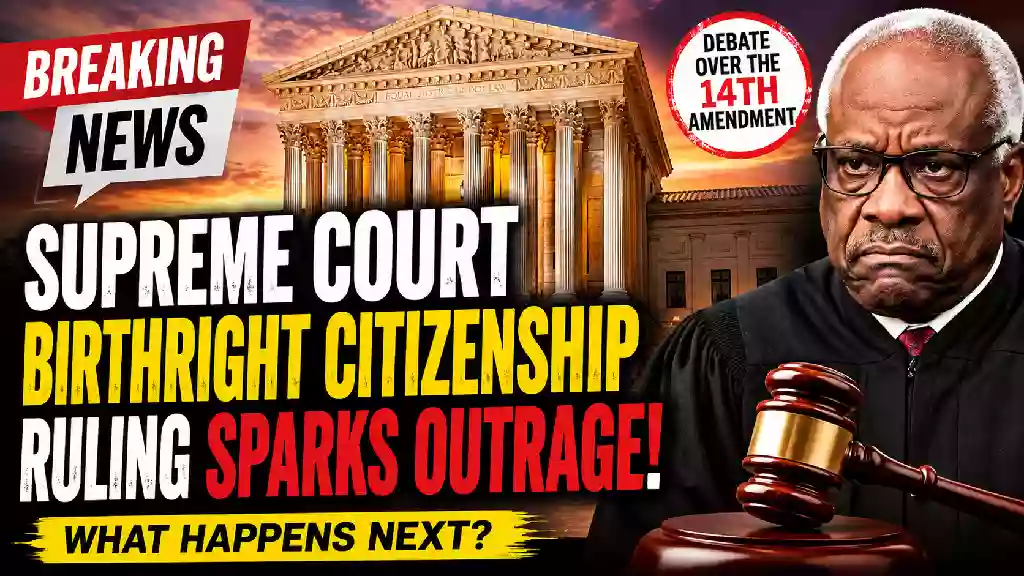
Supreme Court Birthright Citizenship Ruling Ignites New Legal and Political Battle
Critics Legal Experts and Lawmakers Clash Over Constitutional Interpretation and Immigration Policy
The U.S. Supreme Court’s latest ruling involving birthright citizenship has reignited one of the nation’s most contentious constitutional debates, prompting strong reactions from legal analysts, lawmakers, and immigration policy advocates. While supporters of the decision argue that it upholds long-standing constitutional precedent, critics contend that the Court misinterpreted the 14th Amendment and overlooked growing concerns surrounding illegal immigration and birth tourism.
The ruling has also renewed calls for Congress to consider legislation addressing birthright citizenship, with some lawmakers arguing that lawmakers—not the courts—should clarify the scope of the Citizenship Clause under the Constitution.
Constitutional Interpretation Takes Center Stage
At the heart of the debate is the Citizenship Clause of the 14th Amendment, which states that individuals born in the United States and subject to its jurisdiction are citizens of the United States.
Fox News legal analyst Gregg Jarrett criticized the Court’s decision, arguing that historical records from the congressional debates preceding the amendment’s adoption indicate that its authors never intended to grant automatic citizenship to children born to parents who entered the country illegally or were only temporarily present in the United States.
Jarrett pointed to statements made by Senators Lyman Trumbull and Jacob Howard during the 1866 debates, saying they demonstrate that the amendment was designed to apply to those fully subject to U.S. jurisdiction rather than foreign nationals maintaining allegiance to another country.
Supporters of the ruling, however, maintain that decades of judicial precedent support the Court’s interpretation of the Citizenship Clause.
Debate Over the Wong Kim Ark Precedent
Much of the controversy centers on the Supreme Court’s reliance on the landmark 1898 case, United States v. Wong Kim Ark.
Critics argue that the decision involved parents who were lawful permanent residents of the United States, making it fundamentally different from modern cases involving undocumented immigrants or temporary visitors.
According to those challenging the ruling, applying the Wong Kim Ark decision to all children born on U.S. soil regardless of their parents’ immigration status represents an overly broad interpretation of constitutional precedent.
Others argue that the case has long served as the legal foundation for birthright citizenship and remains binding constitutional authority.
Dissent Raises Questions About the Future
Justice Clarence Thomas’ dissent has become one of the most discussed aspects of the ruling.
Thomas questioned whether the Court’s decision would “stand the test of time,” expressing concern that the majority’s interpretation weakens the meaning and value of American citizenship. Justice Samuel Alito also voiced concerns regarding the broader implications of birthright citizenship, particularly as they relate to immigration policy and national security.
The dissent has fueled renewed discussion among constitutional scholars over whether the original intent of the 14th Amendment has been properly interpreted by modern courts.
Birth Tourism and National Security Concerns
Opponents of the ruling also point to birth tourism as an issue requiring greater attention.
Birth tourism refers to the practice of foreign nationals traveling to the United States to give birth so their children receive U.S. citizenship. Critics argue that the practice places financial burdens on public services while creating potential immigration and national security challenges.
Some immigration policy organizations estimate that thousands of birth tourism cases occur annually, although precise figures remain the subject of ongoing debate.
Those supporting tighter immigration controls argue that Congress should address the issue through legislation rather than relying solely on judicial interpretation.
Could Congress Change Birthright Citizenship?
Following the Supreme Court’s decision, attention has shifted to Capitol Hill.
President Donald Trump has urged Congress to pursue legislation addressing birthright citizenship, arguing that lawmakers have the authority to clarify how the 14th Amendment should be applied.
Supporters of this approach point to Section 5 of the 14th Amendment, which grants Congress the authority to enforce the amendment through legislation. Some legal analysts argue that this provision could allow Congress to establish statutory limits concerning birth tourism or children born to individuals unlawfully present in the country.
Any such legislation, however, would likely face immediate constitutional challenges and could ultimately return to the Supreme Court for review.
Debate Over Birthright Citizenship Likely to Continue
The Supreme Court’s ruling has intensified an already heated national discussion over immigration, constitutional interpretation, and the meaning of American citizenship.
While supporters view the decision as reaffirming decades of established legal precedent, critics argue that it expands birthright citizenship beyond the original intent of the Constitution. As lawmakers consider possible legislative responses and legal experts continue to debate the ruling’s implications, birthright citizenship is expected to remain one of the most closely watched constitutional issues in the United States.
#SupremeCourt #BirthrightCitizenship #Immigration #USConstitution #14thAmendment #DonaldTrump #ConstitutionalLaw #LegalNews #USPolitics #BorderSecurity